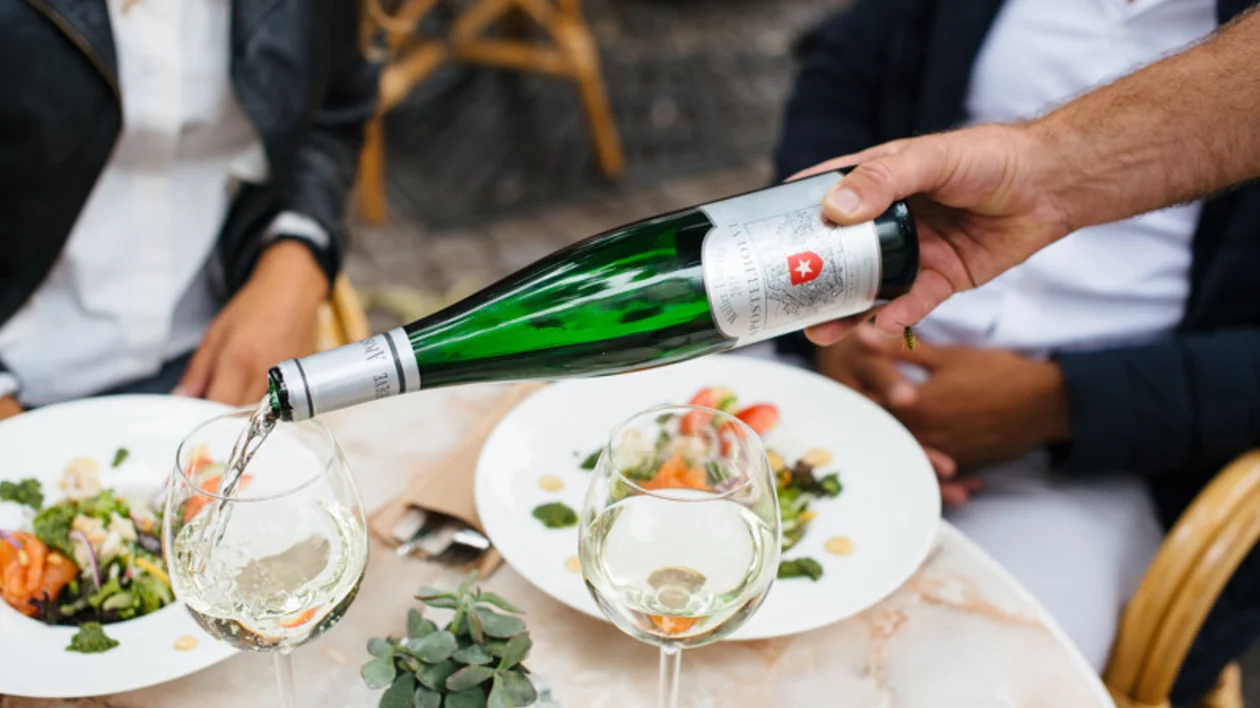
To many travelers, a “Dutch getaway” might mean canals, quaint cities, tulips and Heineken — not a glass of Riesling poured streamside at sunset. That's exactly why harvest season in the Netherlands, from roughly mid-September through late October, is worth experiencing.
The Netherlands isn't trying to out-do any other destination famous for wine, but with around 170 commercial vineyards scattered across a compact country, it's one of Europe's smallest and youngest wine regions. Its scale is its charm: unlike larger wine regions that require a car and a full day to explore, the Netherlands lets you hop on a bike between four wineries in an afternoon and still make it back to dinner in Amsterdam.
Where to go
South Limburg, in the country's rolling southeastern hills, produces more than a third of all Dutch wine grapes. The marl soil and unusually warm summers of recent years have turned villages like Thorn and Maastricht into unlikely wine hubs. At Wijndomein Sint Martinus, winemakers now fly drones over the vines to measure ripeness before deciding the harvest date — a very Dutch mashup of old-world terroir and new-world engineering.
What makes it different?
Harvest tourism can require watching from a safe distance. Here, it often means picking up shears yourself. Several estates recruit volunteer pickers each fall — no experience required, just a willingness to get your hands purple. For afterward, book a room at a working vineyard's bed-and-breakfast, to wake up to the same hillside you helped harvest the evening before.
Cycle, don't drive
Because the country is flat and famously bike-friendly, wine routes double as cycling routes. The signed Route des Vins through South Limburg links vineyards with information boards on grape varieties and winemaking, so you're learning as you pedal. In Gelderland, an annual September wine festival even sends visitors between wineries aboard a converted school bus, with folk singing included at no extra charge.
What's in the glass
Dutch wines skew crisp and cool-climate — Müller-Thurgau, Auxerrois, and Pinot Gris for whites; Regent and Pinot Noir for reds, with a natural acidity that local producers are increasingly channeling into sparkling wine. Don't expect big jammy reds. Do expect the kind of bright, food-friendly bottle that pairs perfectly with a plate of local cheese on a terrace overlooking the hills.
The unexpected extra
Some vineyards sit on ground with real history; one South Limburg site has had vines in the same spot since the year 968. Others double as wedding venues, or sit within walking distance of medieval towns such as Thorn, known for its whitewashed streets.
You won't confuse South Limburg with the Rhône Valley, but that's the point. A wine harvest trip in the Netherlands is intimate, uncrowded, and refreshingly low-stakes — a reason, finally, to add vineyard hopping to a Dutch itinerary.