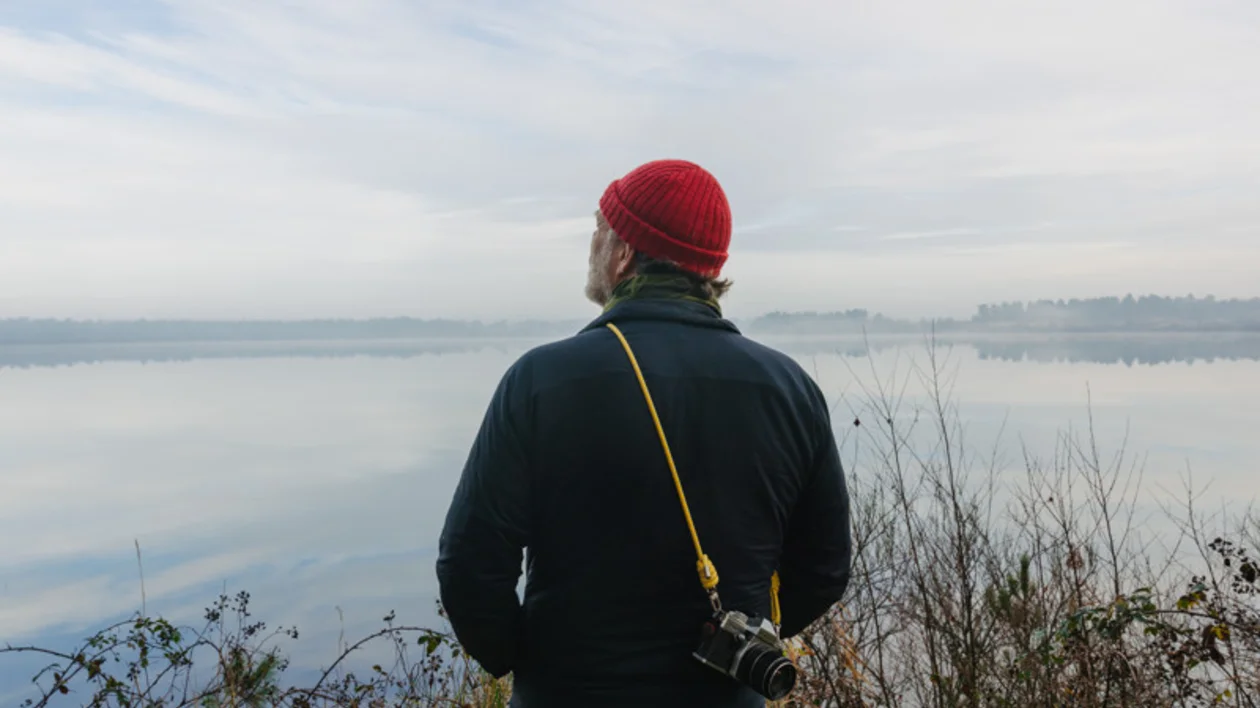
Forget everything you think you know about the Netherlands as a summer destination of packed bike paths and tulip fields. Come October, this country reveals a quieter, more intimate version of itself — one that rewards travelers willing to trade crowds for color.
As the tourist season crowds thin out, Dutch forests, heathlands, and historic town squares settle into a slower rhythm. Dutch autumn offers a landscape that feels almost painted: framed by canals, windmills, and centuries-old brick streets.
Where to find the color
De Hoge Veluwe National Park remains the marquee destination, and for good reason. Located in Gelderland near Arnhem, Apeldoorn, and Wageningen, it's roughly an hour and a half by train from Amsterdam Centraal — take a direct or connecting train to Ede-Wageningen or Apeldoorn, then hop on a short bus ride to the park entrance. The reward: over 13,000 acres of pine woodland, heather-covered moraine, and drifting sand dunes, plus the Kröller-Müller Museum, home to one of the world's largest Van Gogh collections outside Amsterdam. A basic white bicycle is included with park admission, making it easy to explore the park.
Southeast of Arnhem sits Veluwezoom National Park, the country's oldest, and a quieter alternative to its more famous neighbor. Its hilly terrain — dramatic by Dutch standards, cresting near 360 feet at the Posbank — has sweeping views of forest and heath. It's an easy add-on for anyone already visiting Hoge Veluwe.
Closer to the Randstad, the Utrechtse Heuvelrug stretches between Utrecht and Amersfoort, 45 minutes to an hour southeast of Amsterdam by car or train (stations at Driebergen-Zeist, Maarn, and Rhenen sit right on its edge). This glacial ridge of forest, heathland, and country estates is popular because it's so accessible — a genuine wilderness escape without leaving the country's population center behind.
Travelers based near Rotterdam should look south to the Oisterwijkse Bossen en Vennen, a roughly 1,500-hectare mosaic of forest and fen just outside Tilburg in Noord-Brabant, about an hour's drive or train ride from the city. It's still, dark ponds and old-growth woodland genuinely earn the fairytale comparison, and the area draws far fewer international visitors than the Veluwe.
For those willing to go further afield, the Leggelderveld nature reserve and its Blauwe Meer in Drenthe sit roughly two and a half to three hours from both Amsterdam and Rotterdam — a full-day trip best paired with an overnight stay, but one that rewards travelers with genuine solitude and some of the country's darkest, quietest forests.
Renting a car opens up all five with flexibility; without one, the Dutch rail network still gets you within a short bus or bike ride of every reserve listed here.
The takeaway: skip the summer rush and come when the Netherlands turns inward. Fewer crowds, richer colors, and a country that has room to breathe make autumn arguably the most rewarding season to visit