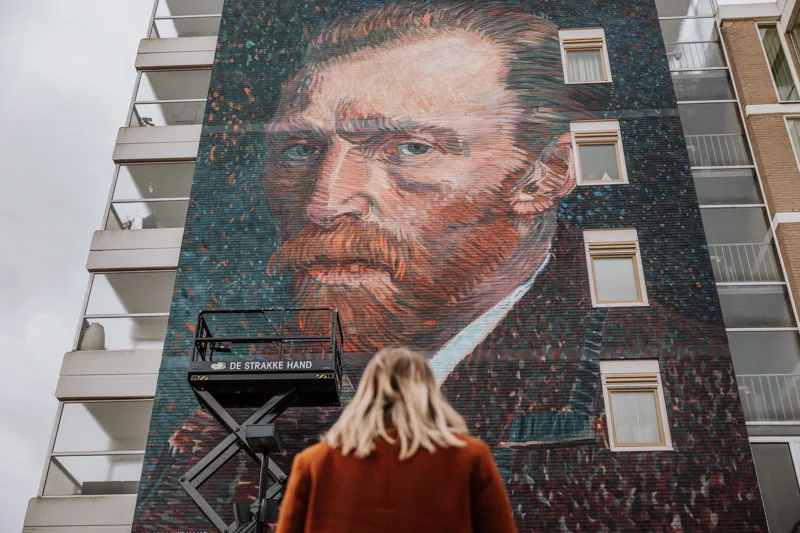
For most people the name Van Gogh brings to mind the skies of Starry Night, sunflowers, and a museum in Amsterdam. However, to truly understand the man behind the masterpieces, you need to go somewhere quieter, where it all began — the Dutch countryside.
Vincent van Gogh was born on March 30, 1853, in the small town of Zundert in the province of Brabant, and from the very beginning, nature was his sanctuary. A reserved, introspective child, he found peace in the open landscapes and unhurried rhythms of rural life. That connection never left him, and would go on to shape some of the most celebrated paintings in art history.
The province of Brabant is where Van Gogh's artistic soul was forged. It was here, among the fields and villages, that he became captivated by the lives of ordinary people — farmers, weavers, and laborers living simply off the land. His time in the picturesque village of Nuenen was particularly transformative. With a population of fewer than 25,000 even today, Nuenen retains the quiet charm that inspired Van Gogh to paint some of his most iconic works, including The Potato Eaters — a raw, deeply human portrait of peasant life that remains one of art history's most powerful images.
What makes a visit to Nuenen so special is that remarkably little has changed since Van Gogh’s time. Walking its streets and surrounding countryside feels less like a museum tour and more like stepping directly into one of his canvases.
Further north lies the province of Drenthe, where Van Gogh spent just three months — yet produced around 40 paintings. In letters to his beloved brother Theo, he described the landscape as possessing "indescribable beauty," and it's easy to see why. Wide open skies, heath-covered moorlands, and a profound stillness seem to slow time itself.
Van Gogh’s painting Shepherd with Flock near a little Church at Zweeloo depicts a Reformed church that still stands today, still holds services, and is still surrounded by the same quintessentially Dutch landscape Van Gogh captured on canvas. Visiting it is a quietly extraordinary experience, a direct, unbroken line between the present moment and the 19th century.
Perhaps the most remarkable thing about following Van Gogh's rural journey is how alive it still feels. Whether you're cycling the Van Gogh-Roosegaarde path near Eindhoven, where the road itself glows like a painting at dusk, or standing in a Drenthe field in contemplative silence, you begin to understand what drove this complex, brilliant man to keep picking up his brush.
Van Gogh may have sold only a handful of paintings in his lifetime, but he left us something priceless: a way of seeing the Dutch landscape that, once experienced in person, is impossible to forget.