In Romania, the Danube – Dunărea in Romanian – accompanies you for 1,075 km, from the spectacular landscapes of Iron Gates Nature Park to the waterways of the UNESCO-listed Danube Delta. In between lies a rich mix of cultural and natural heritage: ancient fortresses, vineyards, nature reserves and lively riverside cities including Drobeta-Turnu Severin, Calafat, Giurgiu, Călărași, Brăila, Galați and Tulcea.
Romania’s capital, Bucharest, lies about 60 km north of Giurgiu, making it an easy addition to a journey along the Lower Danube as the 5th capital on the Danube.
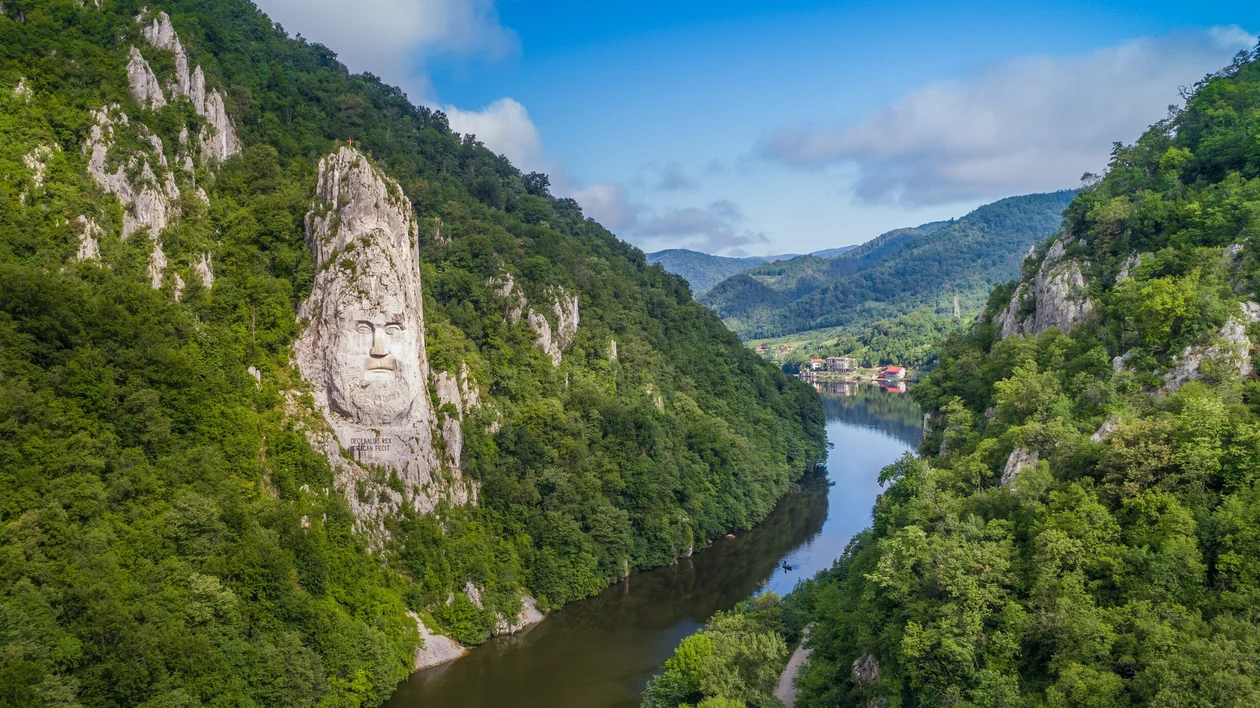
King Decebal’s Head
The monumental stone sculpture of Dacian king Decebal’s Head is one of the best-known sights of the Danube Gorges area. Measuring approximately 55 m high, it rises directly above the water in the Small Cauldron, where the Mraconia Valley meets the Danube.
Located near Orșova, the sculpture was created between 1994 and 2004 at the initiative of the Romanian businessman Iosif Constantin Drăgan.
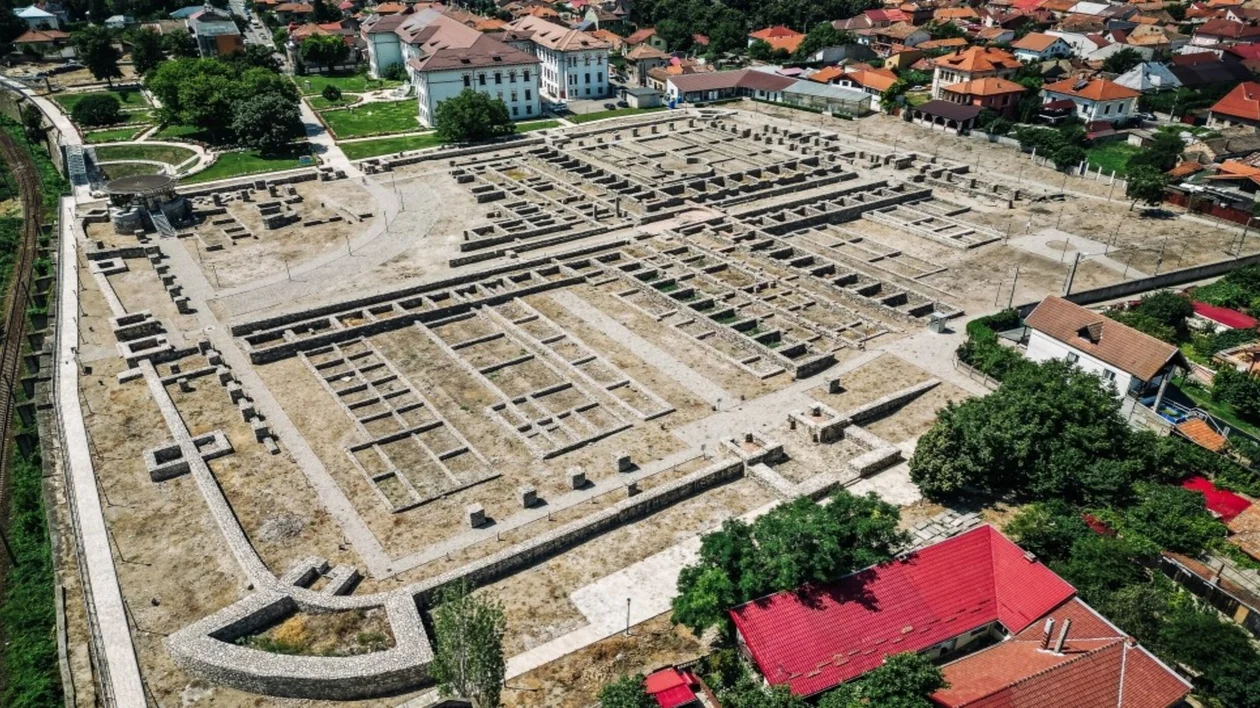
The Roman castrum and the ruins of the Roman bridge in Drobeta
Drobeta-Turnu Severin preserves remarkable traces of the Roman presence on the river. You can still see the remains of Trajan’s Bridge, built between 103 and 105 AD by order of Emperor Trajan and designed by Apollodorus of Damascus.
The bridge was one of the largest bridges of antiquity, extending approximately 1,135 m across the Danube. Remains of the Roman castrum, amphitheatre and baths, can be explored today in the Drobeta Archaeological Park.
Roman - Byzantine Fortress of Sucidava
In the Danube port town of Corabia, the Sucidava Archaeological Complex preserves one of the best surviving ancient fortresses in situ in the historical region of Oltenia.
Sucidava was active between the 3rd and 6th centuries AD. At the entrance, a museum displays artefacts discovered in the area dating from the Neolithic period onward.
Highlights within the fortress include a Roman building with a hypocaust heating system, the Paleo-Byzantine Basilica and the remarkable Secret Well.
Cernavoda Bridge
The Cernavodă Bridge is a landmark of Romanian engineering, connecting Cernavodă and Fetești and the historical regions of Muntenia and Dobrogea.
Construction began in 1890 during the reign of King Carol I and was coordinated by the Romanian engineer Anghel Saligny. Completed five years later, the bridge was the longest bridge in continental Europe and the third in the world.
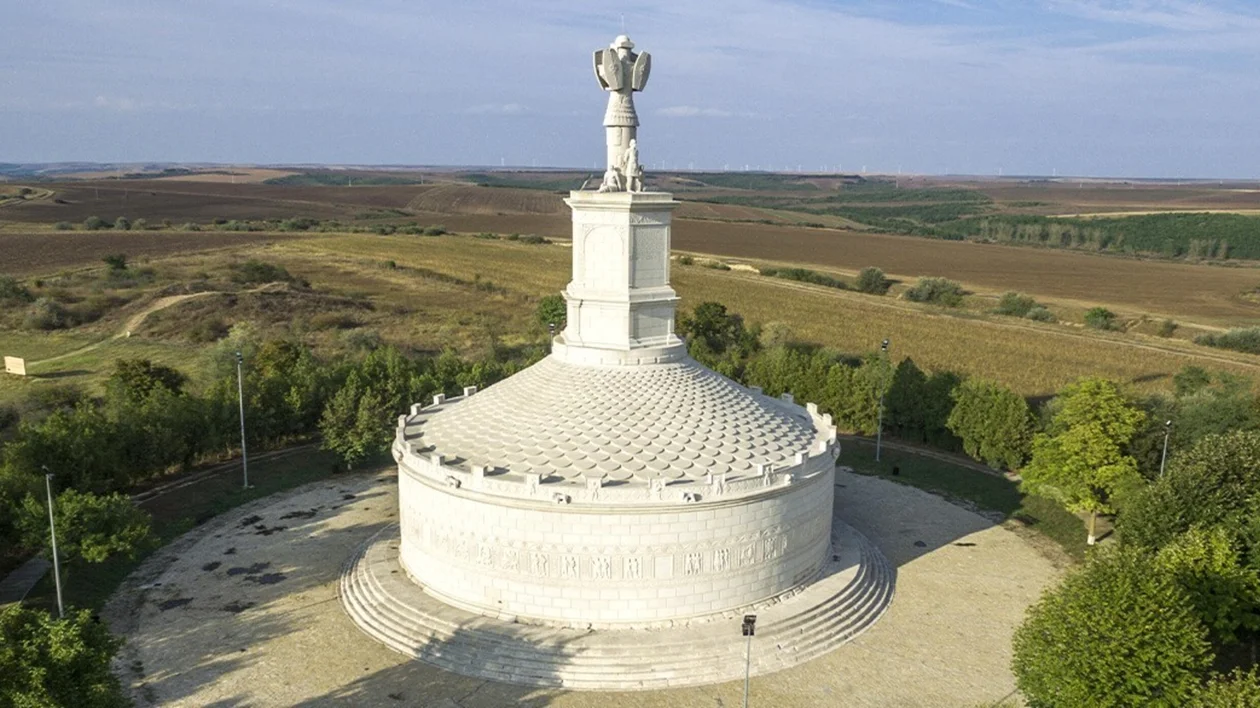
Tropaeum Traiani
At Adamclisi near Constanța, Tropaeum Traiani is one of the greatest monuments of Roman provincial art.
The triumphal monument was built by order of Emperor Trajan, commemorating the Roman victory over Dacians. The story was originally illustrated through 54 sculpted metopes displayed around the monument.
Today, the preserved 48 metopes, together with the trophy, inscriptions and collections of ceramics, lamps, tools, ornaments and other archaeological finds, can be seen in the nearby museum.