A bridge between East and West
In Europe you can feel history with every step. Beautiful stories emerge in quiet valleys, in the walls of ancient monasteries, and on stone facades that have withstood centuries. The Transromanica cultural route is a unique path of such stories through ten European countries. Recognized by the Council of Europe, this route including Germany, Austria, Italy, France, and Serbia reveals how Romanesque art shaped the identity of medieval Europe.
Romanesque art emerged around the year 1000, blending Roman and early Christian traditions with local legends and myths. Its identifying features — round arches, massive walls, and decorative friezes — still grace cathedrals, churches, and monasteries throughout Europe.
Serbian gems on the Transromanica
Along the Serbian section of the route lie monasteries that are not only religious centers but also guardians of national history and art. Positioned at the crossroads of civilizations, the country has contributed monuments that blend Western Romanesque and Eastern Byzantine art, giving rise to the Raška School of architecture, a symbol of Serbian medieval art.
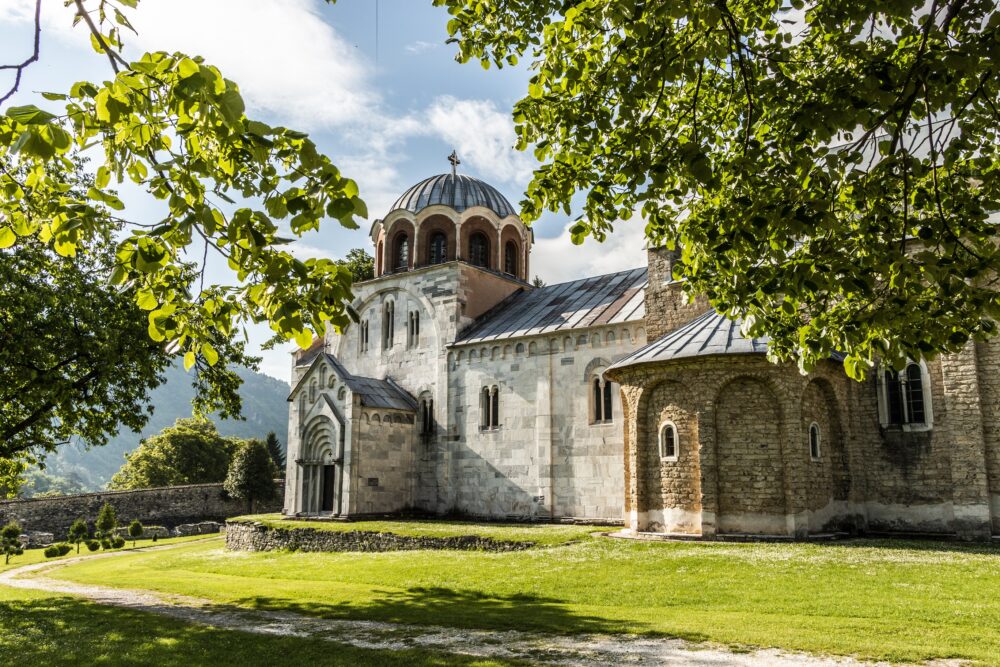
The UNESCO-listed Studenica Monastery was founded by Stefan Nemanja in the 12th century. Its white marble Church of the Virgin contains frescoes considered as masterpieces of medieval painting, such as the famous Crucifixion of Christ, with its deep blue tones and golden stars.
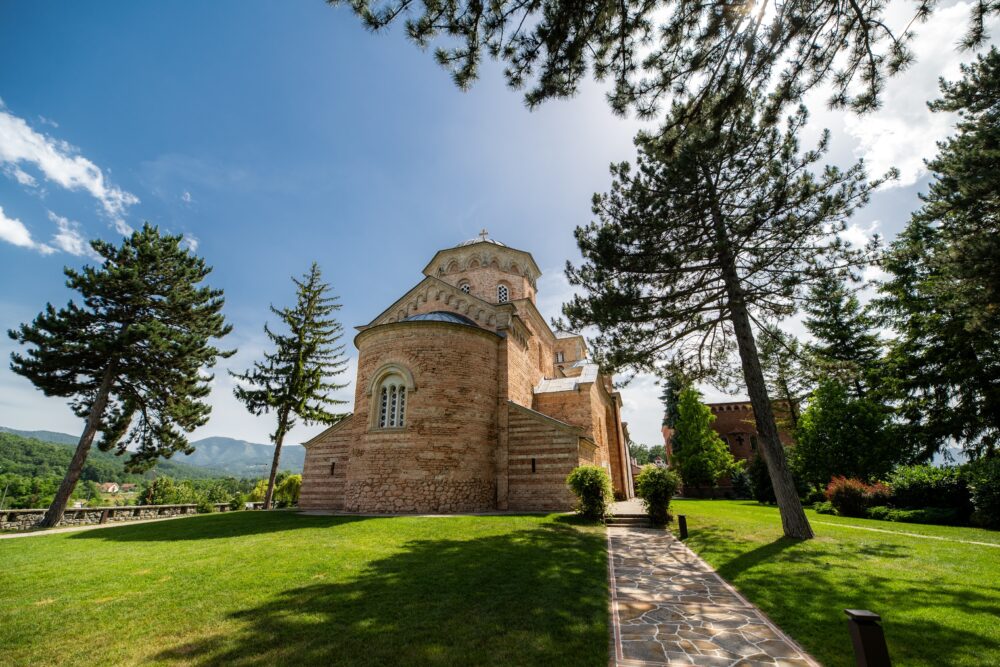
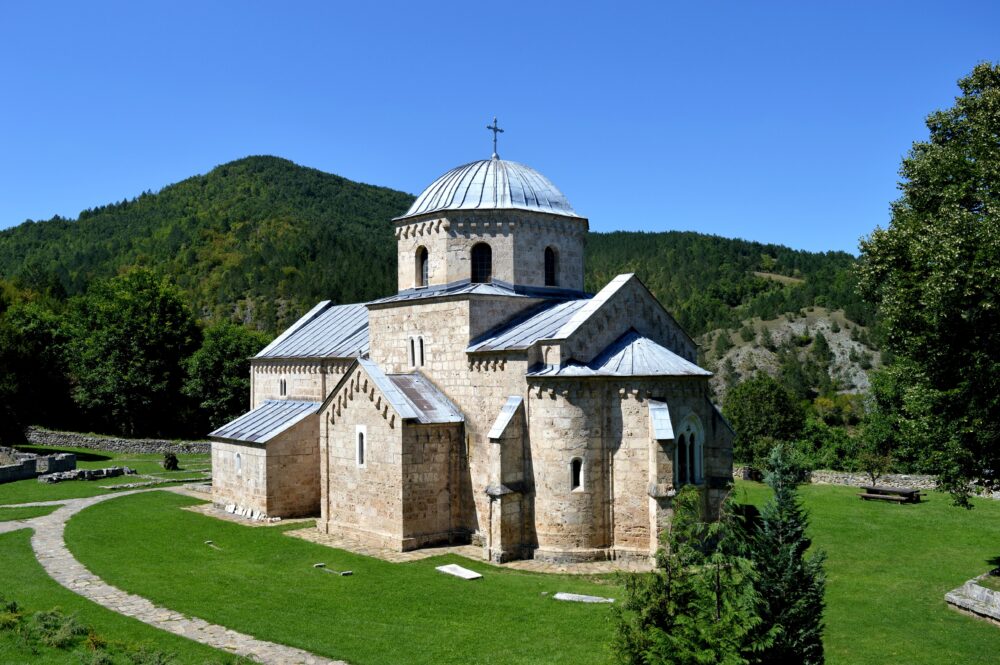
Not far from Kraljevo, in the Ibar River valley, stands Žiča Monastery, the “coronation church” of Serbian kings: seven rulers have been crowned beneath its domes. 13th- and 14th-century frescoes bear witness to the golden age of Serbian art. Another jewel is Gradac Monastery, founded by Queen Helen d’Anjou (Jelena Anžujska), who introduced Gothic elements into its architecture, creating harmony between Western and Eastern traditions. Every year in the monastery compound as May turns into June, the Days of Queen Jelena event celebrates the monarch.
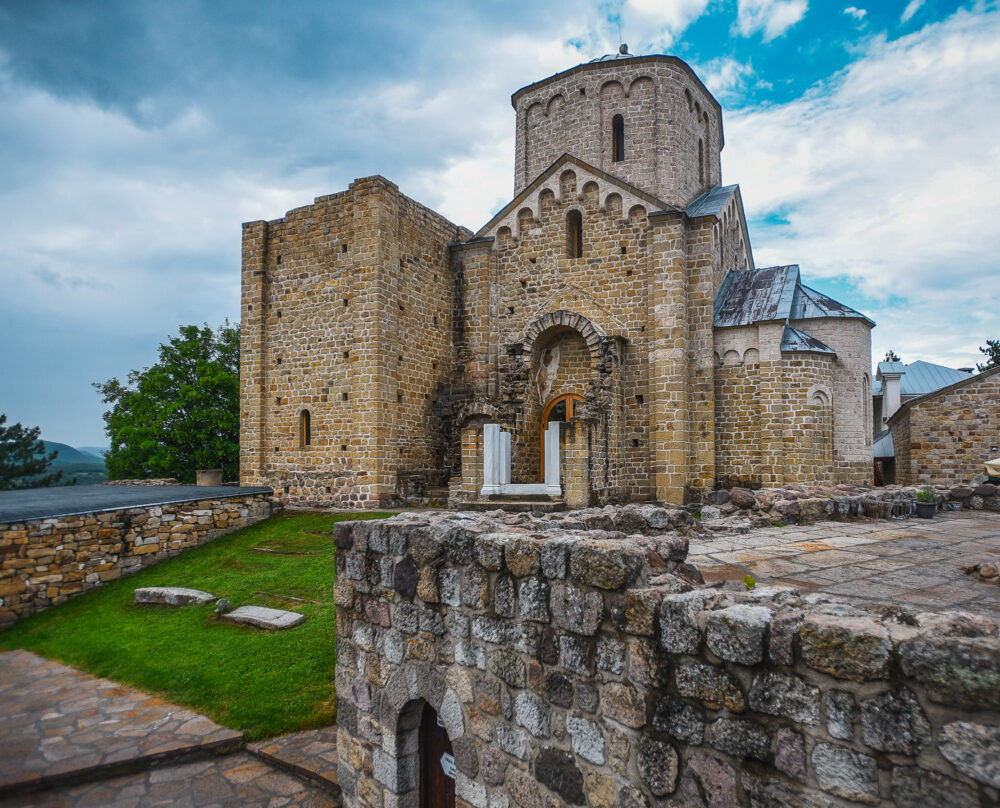
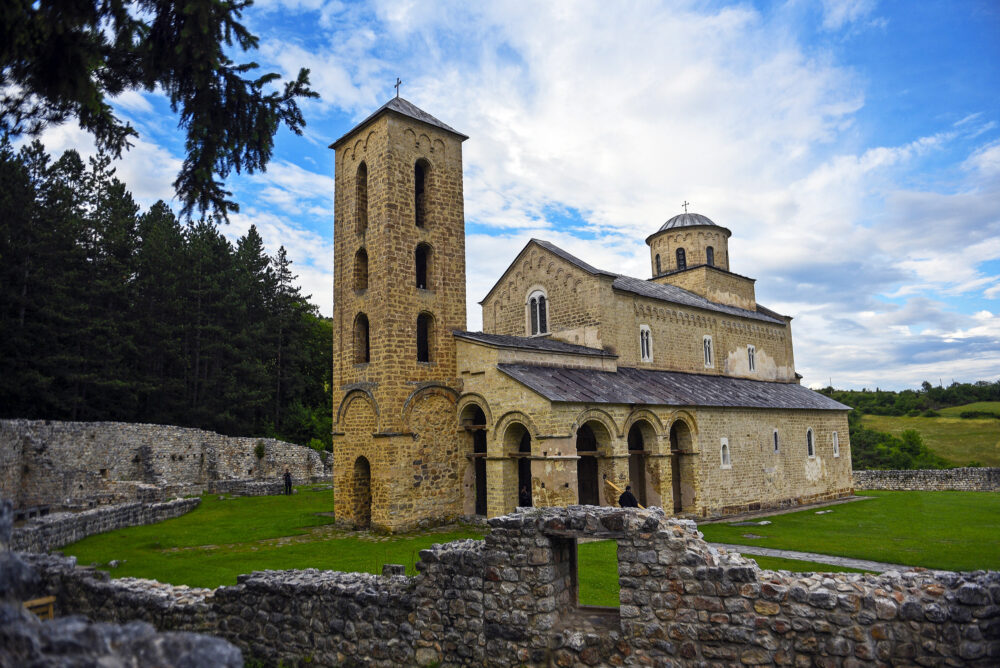
To the south near Novi Pazar in the Valley of the Kings stand Đurđevi Stupovi and Sopoćani, monasteries, whose monumental frescoes radiate spiritual power. Particularly notable is Sopoćani’s 13th-century Dormition of the Mother of God.
A journey through time
The Transromanica presents an opportunity to experience the silence of monastic courtyards, the scent of ancient stone, and the sight of frescoes that have survived eight centuries. Far from the crowds, these places — for example the Studenica monastery’s guesthouse (Konak) — offer an authentic encounter with history, art, and spirituality. In Serbia, they also reveal the roots of statehood, places where the destiny of the nation was shaped and where a culture emerged that continues to define Serbian identity today.
For those seeking extraordinary travel experiences, the Transromanica is an invitation to explore Europe’s deep past. It tells a story of shared heritage that connects people, of art that transcends borders, and of the Europe that once was – and continues to inspire us today.